Stay Updated
Get instant alerts the moment your load plans are ready.
Email gets delayed, but our second layer provides immediate alerts that work even when the app is closed in your browser.
Get instant progress updates on your multiple devices.
No spam, and you can unsubscribe at any time.
Notifications are currently blocked. To enable instant load plan alerts:
1. App-Level Settings:
Check your LoadViewer account preferences or notification profile settings to ensure alerts are turned on internally.
2. Browser-Level Settings:
• Click the lock, settings, or sliders icon in your browser's address bar.
• Find Notifications and change it from Block to Allow or Reset.
• Refresh this page.
Container Load Optimization
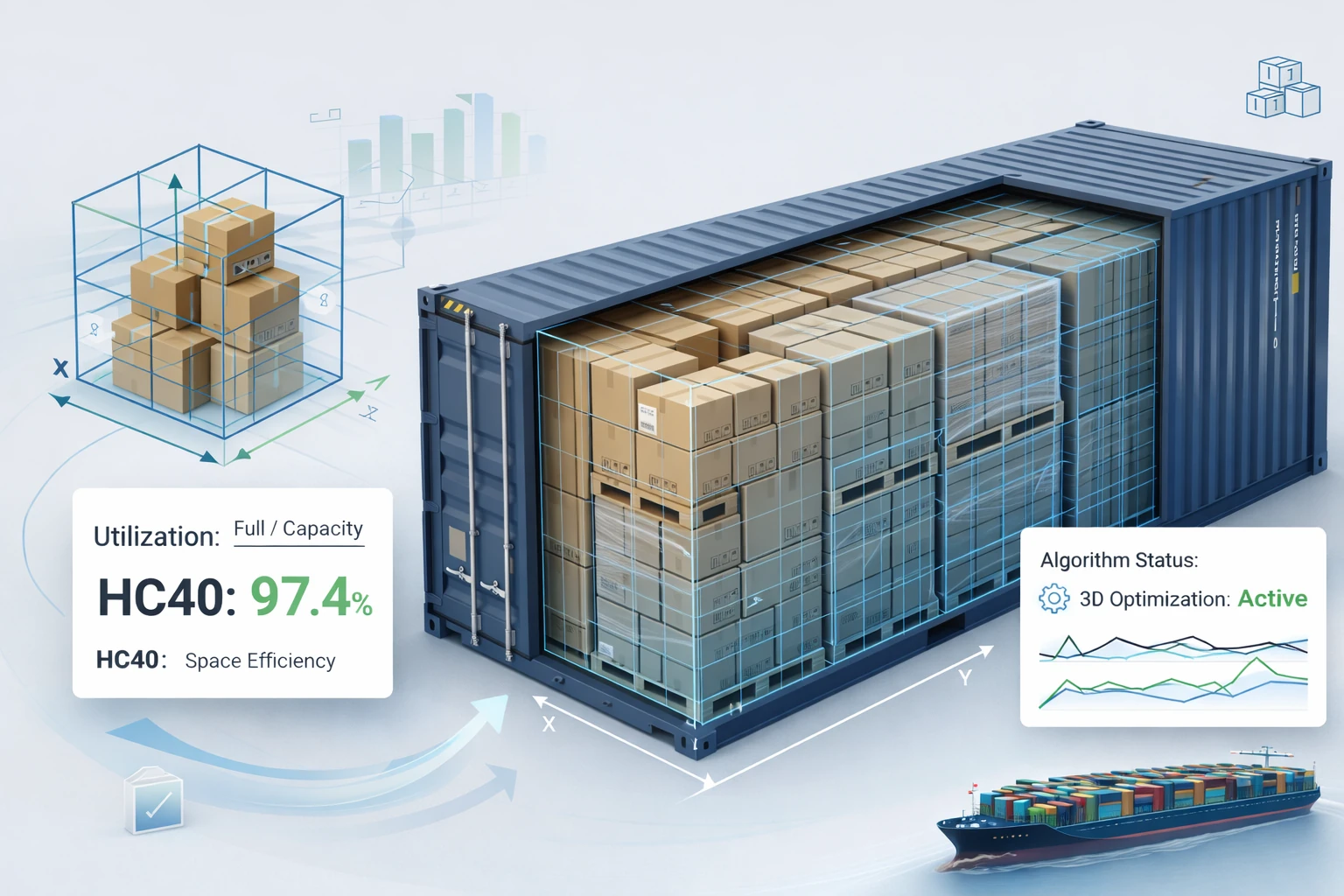
Container load optimization is the process of arranging cargo inside a shipping container to maximize space utilization while respecting real-world constraints such as carton sizes, weight distribution, and stacking rules. Modern logistics planning tools use 3D bin packing algorithms to simulate container packing before the shipment is loaded. This allows exporters and logistics planners to identify the most efficient arrangement of cartons and reduce unused container space.
What is Container Load Optimization?
Container load optimization is the process of determining the most efficient way to arrange cargo inside a shipping container in order to maximize space utilization while maintaining cargo stability and proper weight distribution. Instead of manually stacking cartons based on experience, optimization tools analyze carton dimensions, quantities, and container dimensions to generate highly efficient packing arrangements.
Export shipments often include multiple SKUs with different carton sizes and quantities. Container load optimization evaluates thousands of possible packing combinations to identify layouts that maximize container utilization and reduce unused container space.
Why Container Load Optimization Matters
- Increase container space utilization
- Reduce the number of containers required for shipment
- Lower shipping cost per CBM
- Avoid dead freight caused by unused container space
- Improve shipment planning accuracy before container booking
How 3D Bin Packing Helps Optimize Containers
Algorithm-Based Container Planning
Modern logistics planning tools use 3D container load optimization algorithms based on bin packing techniques to simulate container packing before the shipment is loaded. These algorithms evaluate carton dimensions, quantities, and container constraints to determine efficient cargo placements inside the container.
By analyzing thousands of possible arrangements, optimization software identifies packing layouts that significantly increase container fill ratios compared to manual planning.
Limitations of Pure Mathematical Optimization
Although bin packing algorithms are powerful, real export shipments include practical constraints that mathematical models alone cannot fully capture.
- Uneven SKU quantities
- Fragile or non-stackable cartons
- Warehouse loading sequence limitations
- Last container imbalance
- Inspection delays and shipment readiness differences
Hybrid Container Load Planning
In real logistics operations, the most practical container load plans combine algorithmic optimization with human adjustments. Optimization software generates efficient base layouts, while planners refine the plan based on operational constraints such as shipment readiness, warehouse loading behavior, and cargo handling requirements.
This hybrid approach ensures that container load plans are not only mathematically efficient but also feasible for warehouse teams to execute during actual container loading.
When Exporters Use Container Load Optimization
- Multi-SKU export shipments with varying carton sizes
- Purchase order based shipment consolidation
- Shipments where inventory becomes ready at different times
- Planning multiple containers before booking freight
- Reducing shipping cost by improving container utilization
Container Load Optimization Questions
-
What is Dead Freight and how can LoadViewer reduce it?
Learn what dead freight is and how LoadViewer's 3D bin packing software helps you reduce it by maximizing your container's space and efficiency.
-
Can LoadViewer automatically generate optimized load plans?
Generate optimal load plans automatically with LoadViewer's powerful algorithm for efficient container utilization and reduced planning time.
-
What are the benefits of using 3D bin packing?
3D bin packing maximizes container utilization, reduces shipping costs, and minimizes planning errors, leading to improved logistics efficiency.
-
How can LoadViewer help in maximizing space utilization?
LoadViewer's Advisor helps you break the "68 CBM mindset" by suggesting additional quantities to fill empty space and maximize container capacity.
-
How does LoadViewer ensure the quality and precision of its load plans?
LoadViewer guarantees accurate load plans through a validated algorithm and automated feasibility checks for weight, stacking, and cargo sequencing.
-
How does the 3D bin packing algorithm work?
Understand how LoadViewer uses advanced 3D bin packing algorithms to optimize load plans while respecting real-world constraints like weight and stacking.
-
What is 3D bin packing?
3D bin packing is an algorithmic method to optimally arrange boxes in a container, maximizing space while respecting weight, dimension, & stacking constraints.
-
Can 3D bin packing help optimize container load plans?
LoadViewer uses a powerful 3D bin packing algorithm to optimize container loads, maximizing space while respecting all cargo and container constraints.