Stay Updated
Get instant alerts the moment your load plans are ready.
Email gets delayed, but our second layer provides immediate alerts that work even when the app is closed in your browser.
Get instant progress updates on your multiple devices.
No spam, and you can unsubscribe at any time.
Notifications are currently blocked. To enable instant load plan alerts:
1. App-Level Settings:
Check your LoadViewer account preferences or notification profile settings to ensure alerts are turned on internally.
2. Browser-Level Settings:
• Click the lock, settings, or sliders icon in your browser's address bar.
• Find Notifications and change it from Block to Allow or Reset.
• Refresh this page.
Container Loading Guide
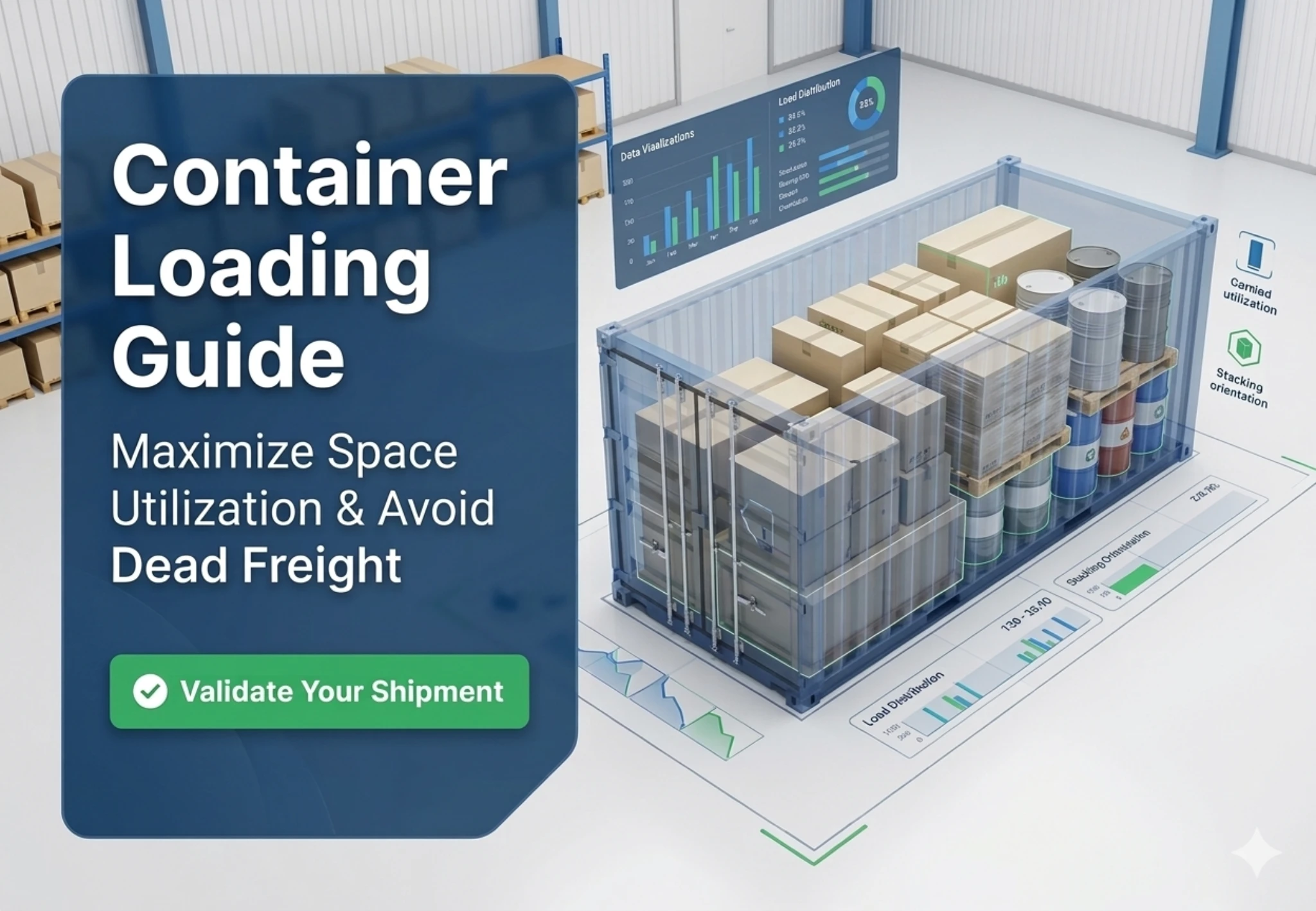
Learn how to load a shipping container efficiently. Understand container packing methods, weight distribution, and practical loading strategies used by exporters and logistics planners. Shipping container loading is a critical step in export logistics because freight costs are usually charged per container. Efficient loading increases container utilization and reduces the number of containers required for shipment.
What is Container Loading?
A shipping container is typically loaded inside a warehouse before being transported to a port or inland container depot for international shipment.
Container loading is the process of arranging cargo inside a shipping container to maximize space utilization while maintaining safe weight distribution and cargo stability during transportation. Efficient container loading helps exporters reduce shipping costs, avoid cargo damage, and improve warehouse loading efficiency.
Most export shipments contain multiple SKUs, cartons of different sizes, and varying quantities. This makes container loading more complex than simply filling the container volume.
Why Container Loading Efficiency Matters
- Reduce shipping cost per CBM
- Maximize container space utilization
- Avoid dead freight (paying for unused container space)
- Improve warehouse loading efficiency
- Reduce cargo movement and damage during transit
Common Shipping Container Loading Methods Used by Exporters
Manual Container Loading
Warehouse teams manually decide how cartons should be stacked inside the container. This method depends heavily on experience and often leads to unused container space.
Pre-planned Container Loading
Some exporters prepare loading plans before the container arrives at the warehouse. This allows the loading team to follow a structured packing sequence.
3D Container Load Optimization
Modern logistics planning tools use optimization algorithms to simulate container packing before the shipment is loaded. This approach helps maximize container utilization and identify the most efficient packing arrangement.
How to Load a Shipping Container Step by Step
- Measure carton dimensions and shipment quantities.
- Calculate container capacity and usable space.
- Group cartons with similar dimensions.
- Place heavier cargo at the bottom.
- Stack cartons to maintain stability during transit.
- Fill remaining gaps with smaller cartons.
- Verify weight distribution across the container floor.
Challenges in Real Export Shipments
Real container loading rarely follows perfect mathematical models. Export shipments often face practical constraints such as:
- Multiple carton sizes
- Uneven SKU quantities
- Last container imbalance
- Inspection delays
- Warehouse loading limitations
Tips to Maximize Container Space Utilization
- Group cartons with similar dimensions
- Plan loading sequence before container arrival
- Avoid mixing unstable carton stacks
- Consider weight distribution across the container floor
- Use container loading software to simulate packing plans
Container Loading vs Container Load Optimization
Container loading refers to physically arranging cargo inside a container, while container load optimization focuses on finding the most efficient packing arrangement before loading begins.
Container Loading Questions
-
Can LoadViewer handle different container types?
Plan effectively with LoadViewer across a wide range of container sizes and specialized configurations for accurate load planning.
-
How does LoadViewer handle different box sizes and shapes?
LoadViewer's powerful algorithm manages various box sizes and irregular shapes, allowing you to define dimensions and stacking constraints for optimal packing.